Chicken Gyros Recipe: How to Spit-Roast Gyros at Home | Auspit
Author: Rhiannon Peterson Date Posted:15 May 2024
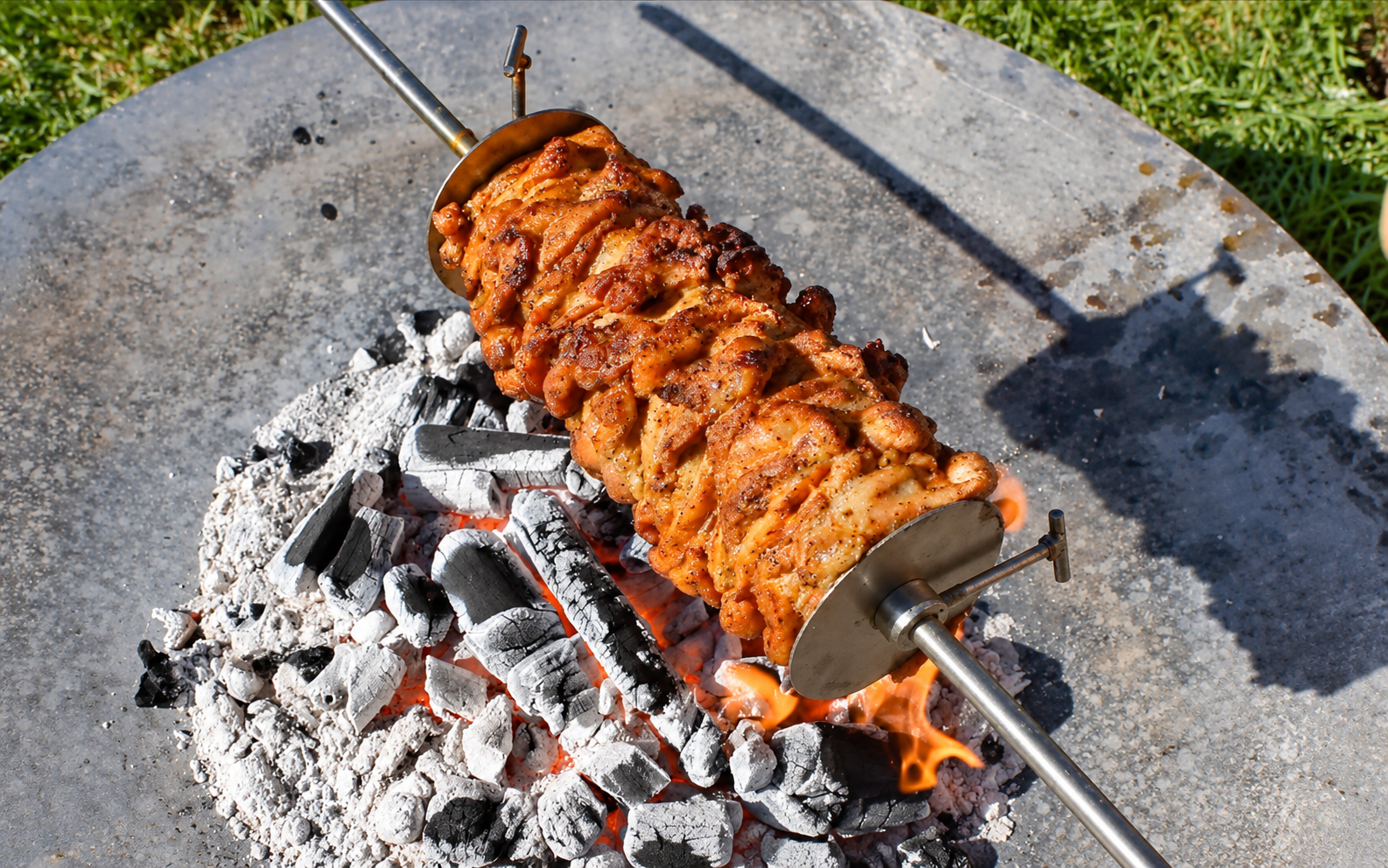
Gyros looks like restaurant territory until you've actually stacked one yourself. The truth is it's one of the more forgiving things you can put on a spit, and with the right gear it comes together faster than most people expect. This chicken gyros recipe walks through exactly how it's done using an Auspit gyros disc setup, chicken thighs, and a proper Greek seasoning, the same method shown in our Spitmate demo video.
No prongs, no wrestling with skewered meat that won't sit straight. Just a clean stack, a solid press, and a slow turn over the coals until the outside is crisping and ready to carve.
What You'll Need
The whole method leans on one piece of gear doing most of the work: the gyros disc. Unlike prongs, which pierce and hold larger single cuts, a disc set clamps a stack of thin slices together so the whole thing turns as one solid block instead of shifting apart as it cooks.
For this recipe you'll want:
-
Boneless chicken thighs, sliced into flat pieces
-
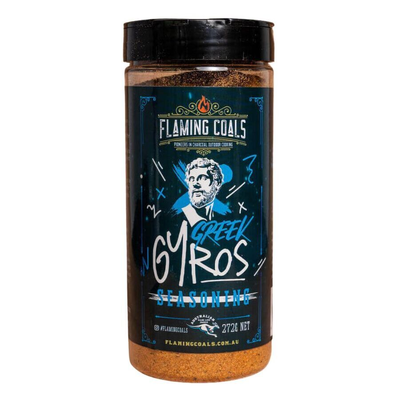
A Greek gyro seasoning (we used the Flaming Coals Gyros Rub)
-
Olive oil, lemon juice and garlic for basting
-
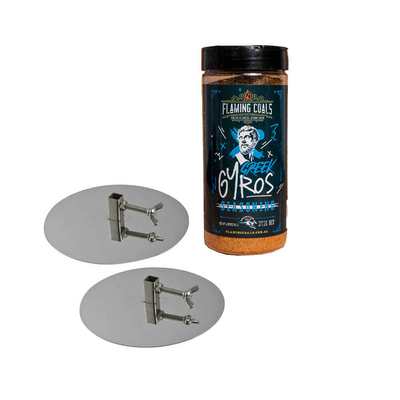
A skewer and a pair of gyros discs sized to your spit
-
A sharp carving knife
If you're setting this up from scratch, the Jumbuck Spit Greek Gyros Discs and Seasoning Pack bundles the discs with the seasoning in one go, which saves hunting down both separately.
Stacking the Chicken Thighs on the Skewer
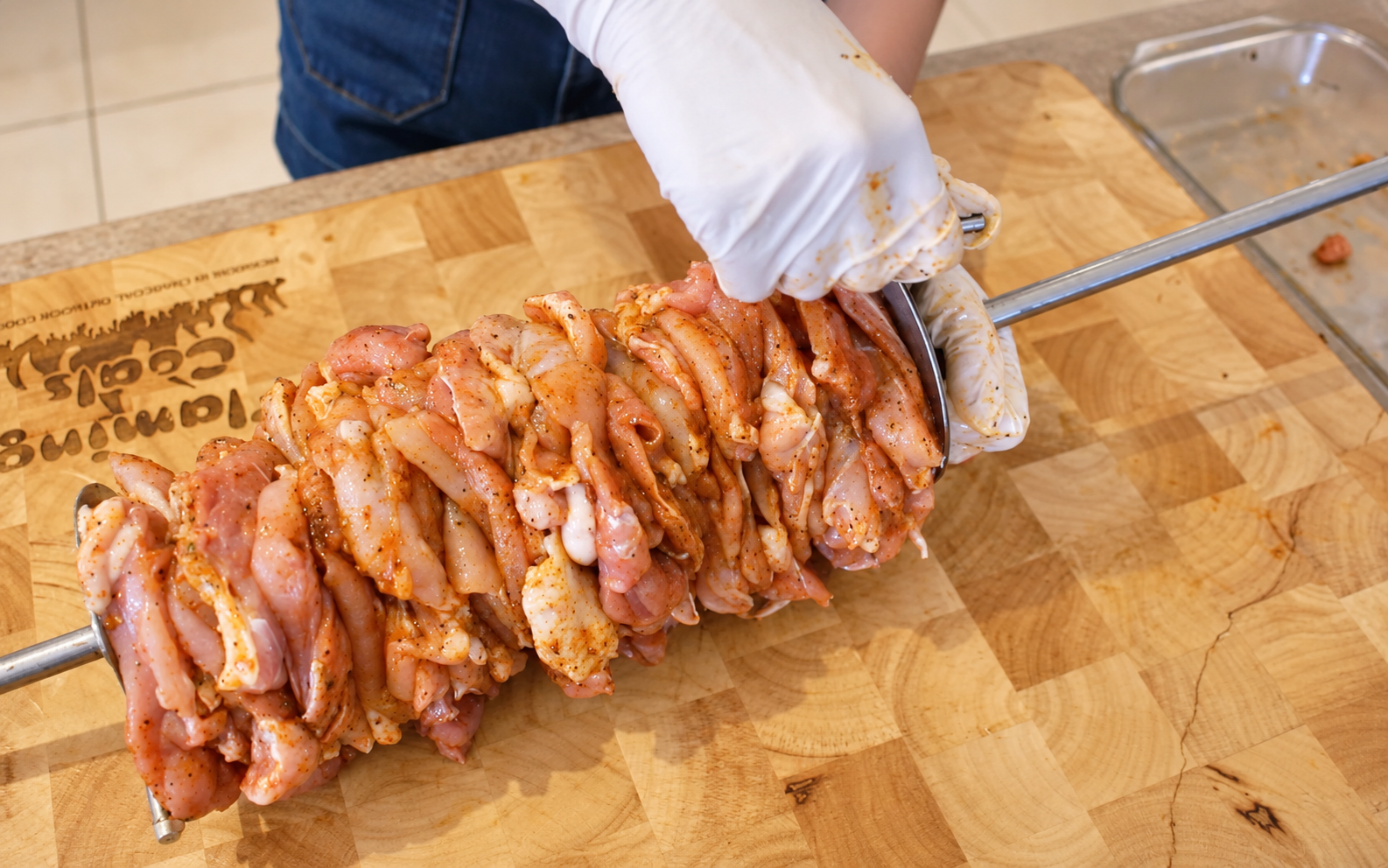
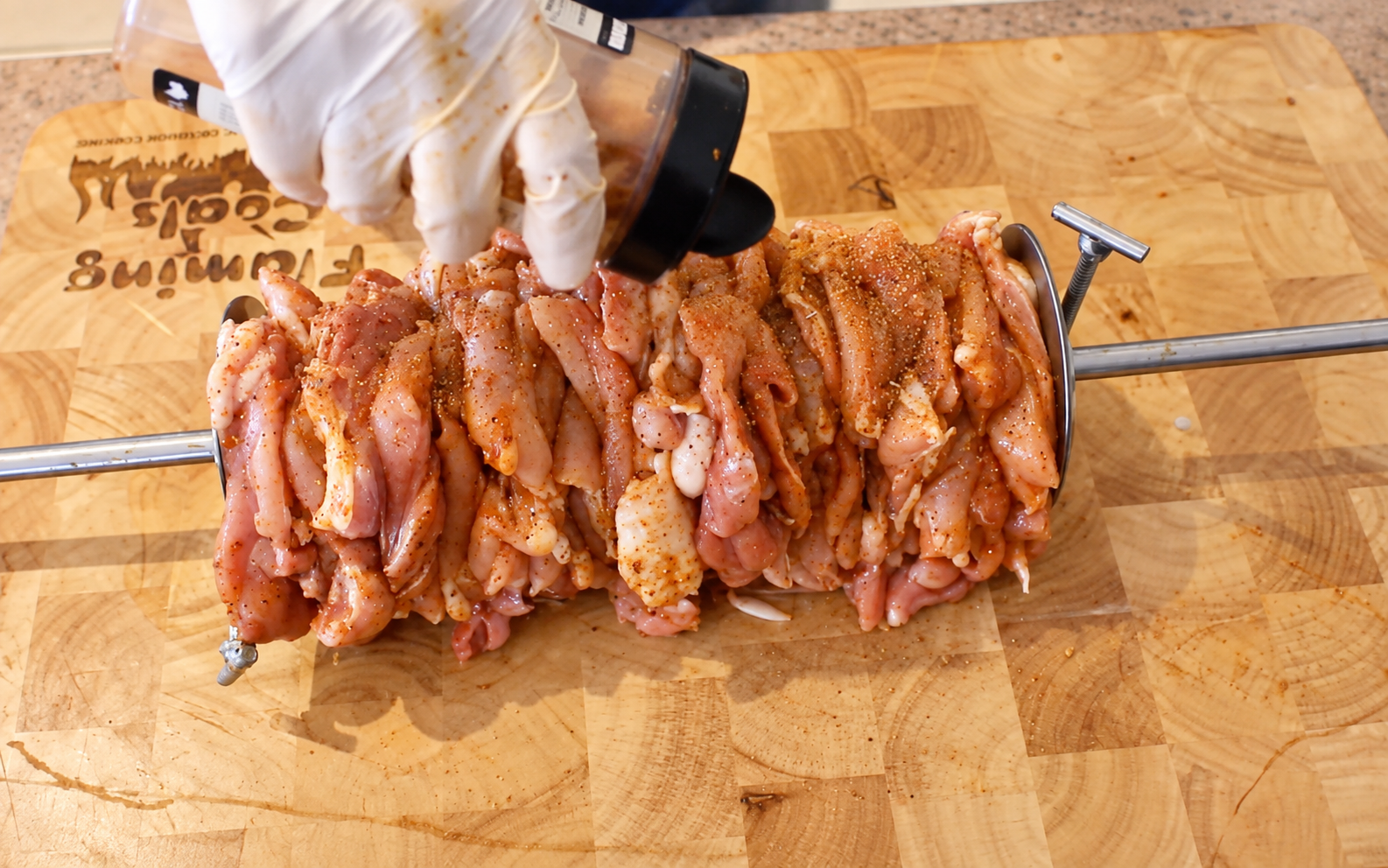
This is where the disc setup earns its keep. Slide the skewer through until it reaches the first disc, then start layering the chicken thighs on evenly, keeping the stack roughly the same thickness all the way round so it cooks at an even rate.
Once the meat is stacked, slide the final disc on and apply firm, even pressure to set the whole thing. You want the stack tight enough that it holds together as one block under its own weight when the spit turns, not so loose that it slumps or bulges to one side. A properly pressed gyros stack should feel solid when you push against it, not soft or shifting.
Seasoning It Properly
Once the stack is set, apply another layer of seasoning over the outside. This is different to seasoning the individual pieces before stacking. Coating the outer surface after it's pressed together means the whole exterior gets an even hit of flavour right where it's going to crisp up first.
The Flaming Coals Greek gyro seasoning works well here because it's built for exactly this style of cook, but any solid Greek-style blend with oregano, garlic and lemon notes will do the job.
Onto the Coals
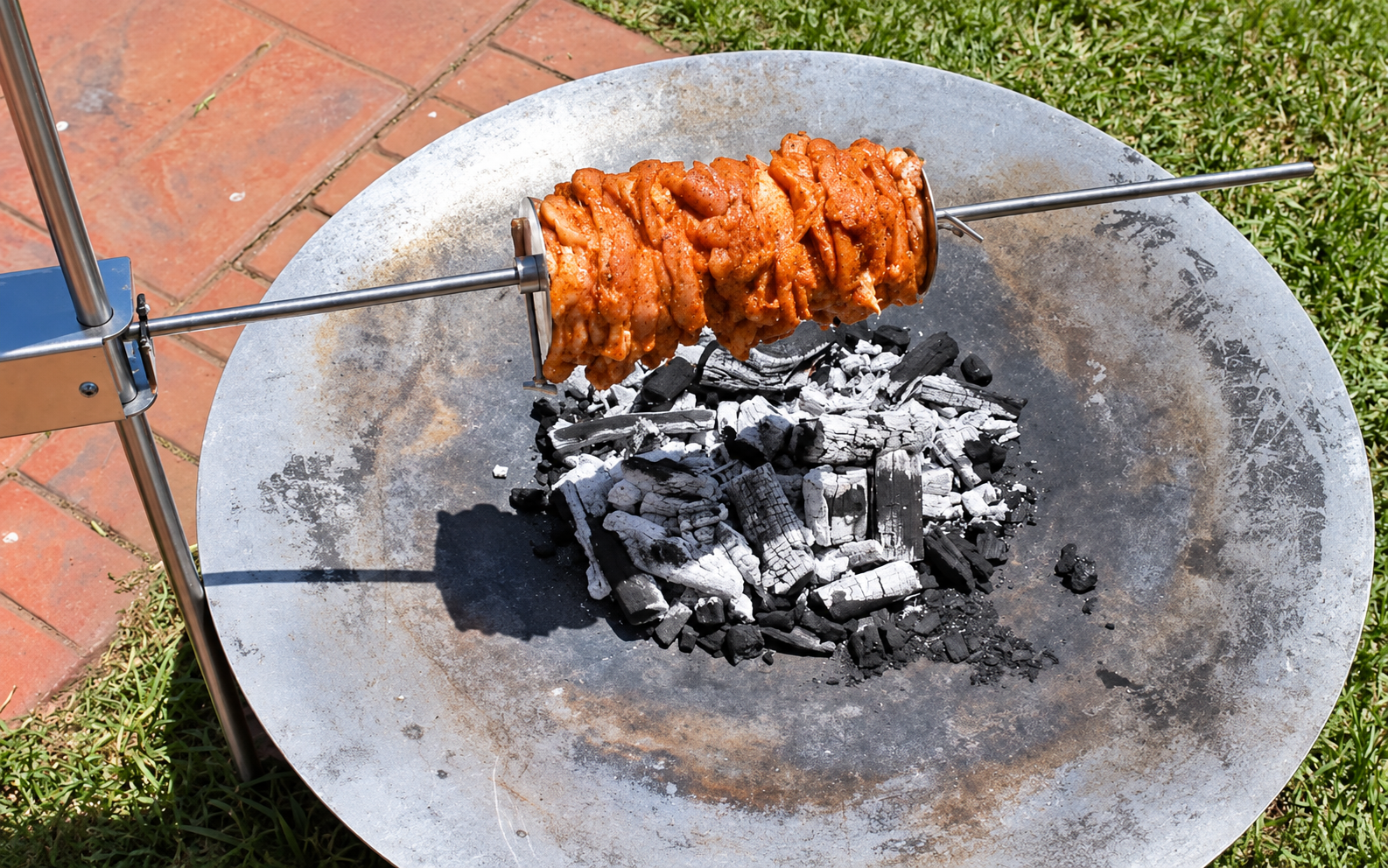
Position the gyros stack over the coals and let the spit do the work. This is a slow, steady cook rather than a fast sear, since the goal is to render the outside crisp while the centre of the stack stays moist and cooks through gradually.
Baste regularly with a mix of olive oil, lemon juice and garlic. This does two things: it keeps the outer surface from drying out under direct heat, and it builds a second layer of flavour on top of the seasoning as it caramelises against the coals.
One reason a proper disc setup matters here rather than an improvised alternative: cheaper or thinner plates can warp or bow under sustained heat, which throws the whole stack off balance on the spit. A 2mm stainless steel disc holds its shape under pressure and heat, so the stack stays true and turns evenly the whole way through the cook.
Chicken needs to reach an internal temperature of 75°C to be safe to eat, so check the centre of the stack with a meat thermometer before you start carving, not just the crisped outer layer.
Carving as You Go
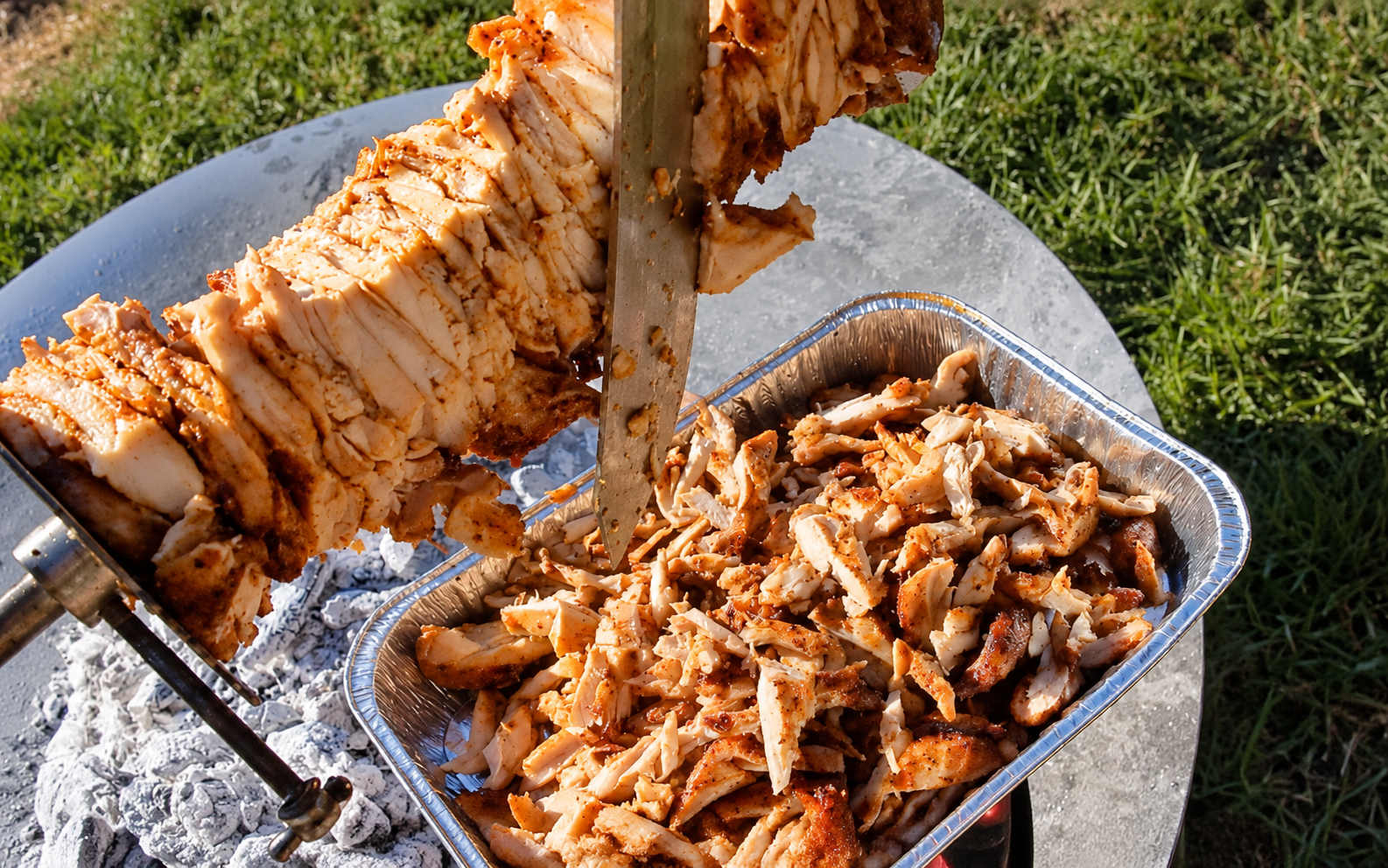
The best part of cooking gyros this way is that you don't wait for the whole thing to finish before you start eating. Once the outer layer is visibly crispy, cut it away with a sharp knife, working close against the flat surface of the disc for a clean, even slice. Then keep roasting, and trim each new layer off as it crisps in turn.
This is also where the disc setup beats prongs outright. There are no spikes to carve around, so you get a clean cut every time instead of working blind against hidden metal.
Why Discs Beat Prongs for Gyros
If you're wondering why gyros specifically call for a disc setup rather than the prongs you'd use for a roast, it comes down to how the meat is structured. Gyros is built from thin stacked slices rather than one solid cut, so it needs even pressure across a flat surface rather than a few points holding it in place. We've gone through how gyros discs actually work in more detail if you want the full rundown before you buy.
Good for the Backyard, Better on the Road
Because the whole setup is compact, a disc-and-skewer gyros rig travels well. It's a genuinely solid option for a 4WD trip or a weekend at the campsite, where you want to feed a group properly without hauling a full kitchen setup. Pack the discs, the seasoning and a bag of chicken thighs, and you've got a proper feed sorted wherever the spit ends up.
Once you've got the method down, it's easy to switch the protein or the seasoning blend and keep the same technique for lamb shoulder or a different spice mix entirely.
Ready to set one up yourself? Browse our full range of spit accessories to get sorted.
FAQ
How do you cook chicken gyros on a rotisserie spit?
Stack seasoned boneless chicken thighs tightly between two gyros discs on the rotisserie skewer, then cook them slowly over hot charcoal. As the outside becomes golden, crispy and fully cooked, carve off thin slices and continue roasting the remaining chicken.
What is the best chicken for homemade gyros?
Boneless chicken thighs are one of the best cuts for homemade chicken gyros because they stay juicy during the longer rotisserie cook and develop a crisp, flavourful exterior. Their higher fat content also makes them more forgiving than chicken breast when cooking over charcoal.
What internal temperature should chicken gyros reach?
Chicken gyros should reach an internal temperature of at least 75°C before serving. Check the thickest part of the chicken stack with a meat thermometer and make sure each layer is fully cooked before carving it from the spit.
Why do you need gyros discs for spit roasted gyros?
Gyros discs compress the sliced chicken into a tight, even stack so it stays secure while rotating on the spit. Unlike traditional spit prongs, the flat discs support the whole stack and make it easier to carve clean slices as each outer layer cooks.
Can you cook chicken gyros over charcoal?
Yes. Charcoal is ideal for spit roasted chicken gyros because it provides steady radiant heat while adding a smoky flavour to the meat. Keep the chicken rotating over a controlled bed of hot coals rather than strong flames so the outside crisps gradually without burning.