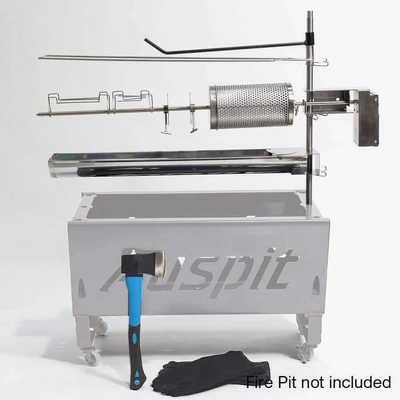
Whole Chicken on a Campfire Rotisserie | Auspit Guide
Author: Rhiannon Peterson Date Posted:15 May 2024
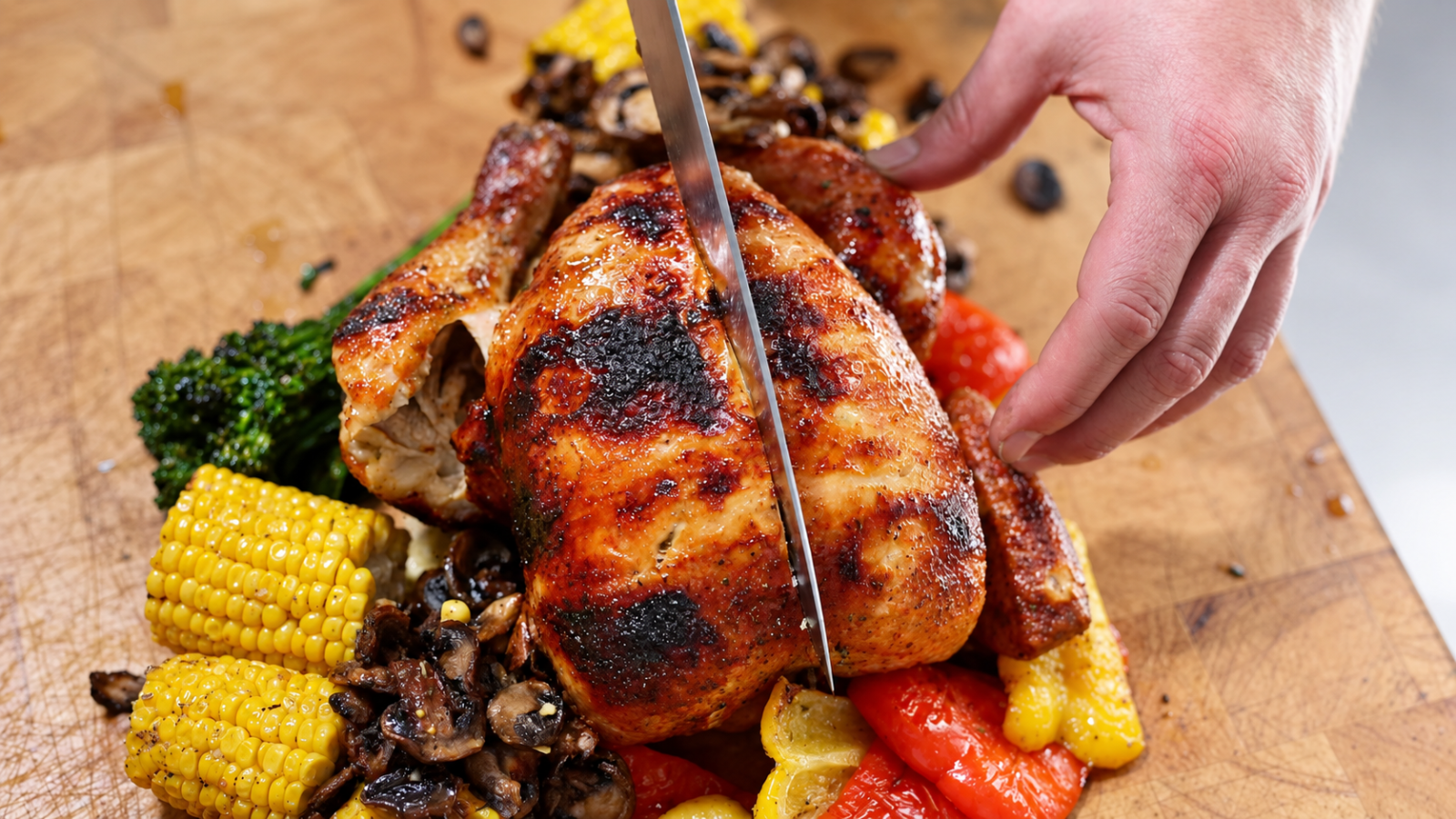
There's not much that beats a whole chicken turning slowly over an open fire. No oven to babysit, no gas burner hissing away, just fire, smoke and a bit of patience while the skin crisps up golden and the smell drifts around the campsite. If you've got your Auspit set up and a chicken ready to go, this is exactly how we do it.
Cooking a whole chicken on a campfire rotisserie is one of the simplest wins in camp cooking once you've got the method down. You don't need a big rig or a power source, just your Auspit skewer, a decent fire and a bit of know-how on timing. Here's the full rundown, straight from a cook we filmed ourselves.
What You'll Need
-
A whole chicken (a standard 1.6 to 2kg works well for this method)
-
A rub of your choice
-
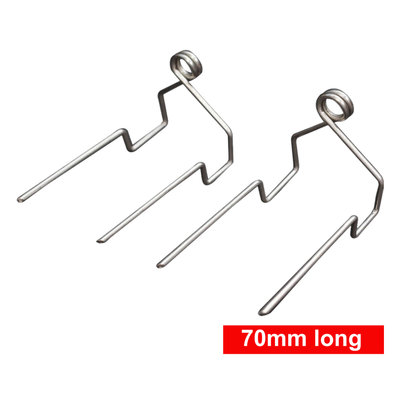
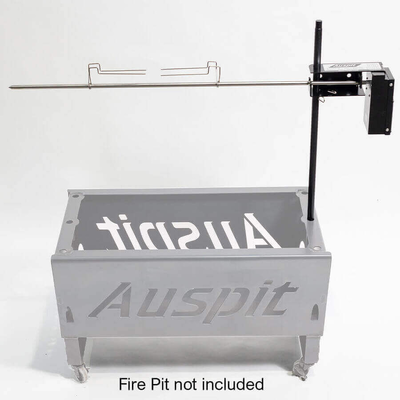
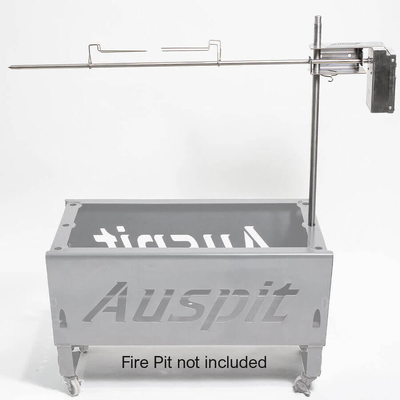
Your Auspit skewer and 2 chicken prongs
-
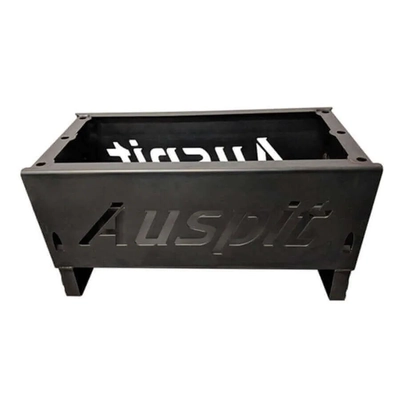
A firepit or fire drum
-
Firelighters and dry wood
-
An instant read thermometer
If you haven't settled on a heat source yet, it's worth reading our guide on choosing the right fire pit or heat source for your Auspit setup, which walks through the difference between a fire pit, charcoal tray and fire drum for this kind of cook.
Rub the Chicken Properly
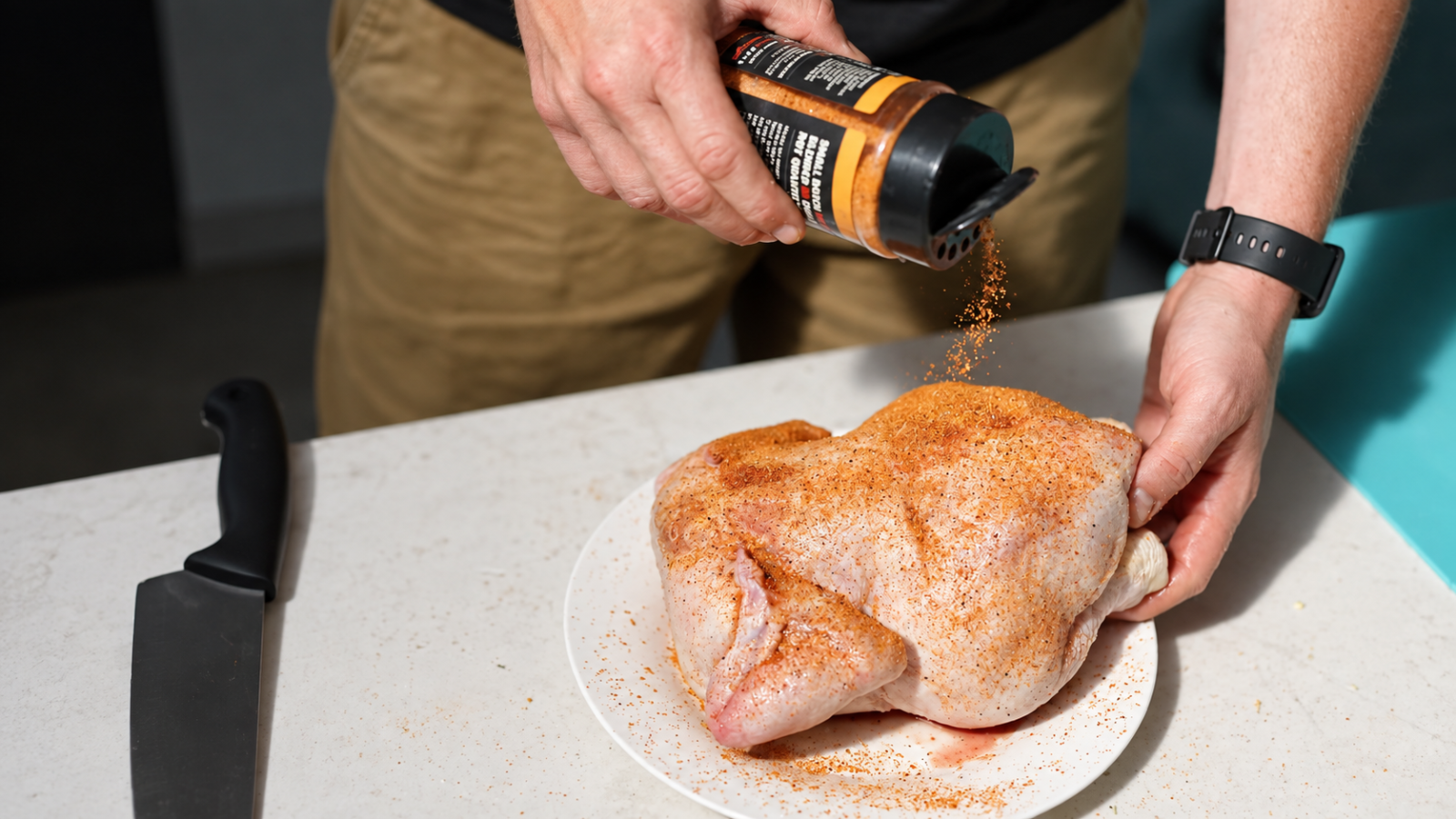
Coverage is everything here. Hold the rub up and sprinkle it down over the chicken from a bit of height rather than patting it on close up. That height gives you a much more even spread across the whole bird instead of clumps in some spots and bare patches in others.
We used the Clucking Mad Chicken Rub from Flaming Coals for this cook, but any decent poultry rub will do the job. The main thing is getting it onto the entire surface, including underneath and into the cavity, not just the top.
Secure the Chicken on the Skewer
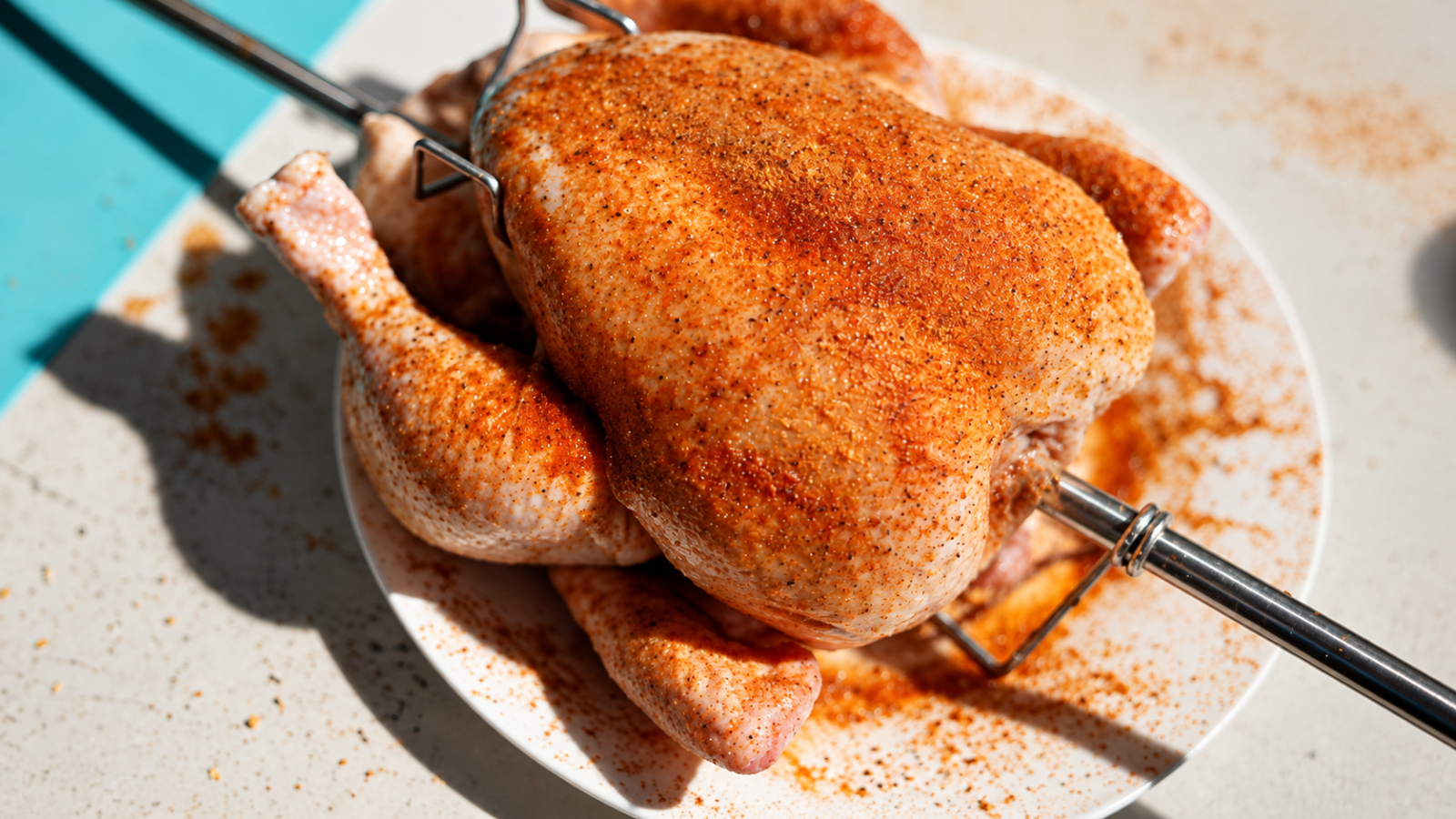
Once the chicken's rubbed, thread it onto your Auspit skewer through the length of the bird, then lock it in place using 2 chicken prongs, one at each end. The prongs stop the chicken spinning independently of the skewer, which matters more than people expect. If the bird can slip on the skewer, one side cooks faster than the other and you end up with uneven results.
Push the prongs in firmly and tighten them down so there's no play in the chicken at all. Give it a wiggle before it goes anywhere near the fire. If it moves, it's not locked in yet.
Light Your Fire the Right Way
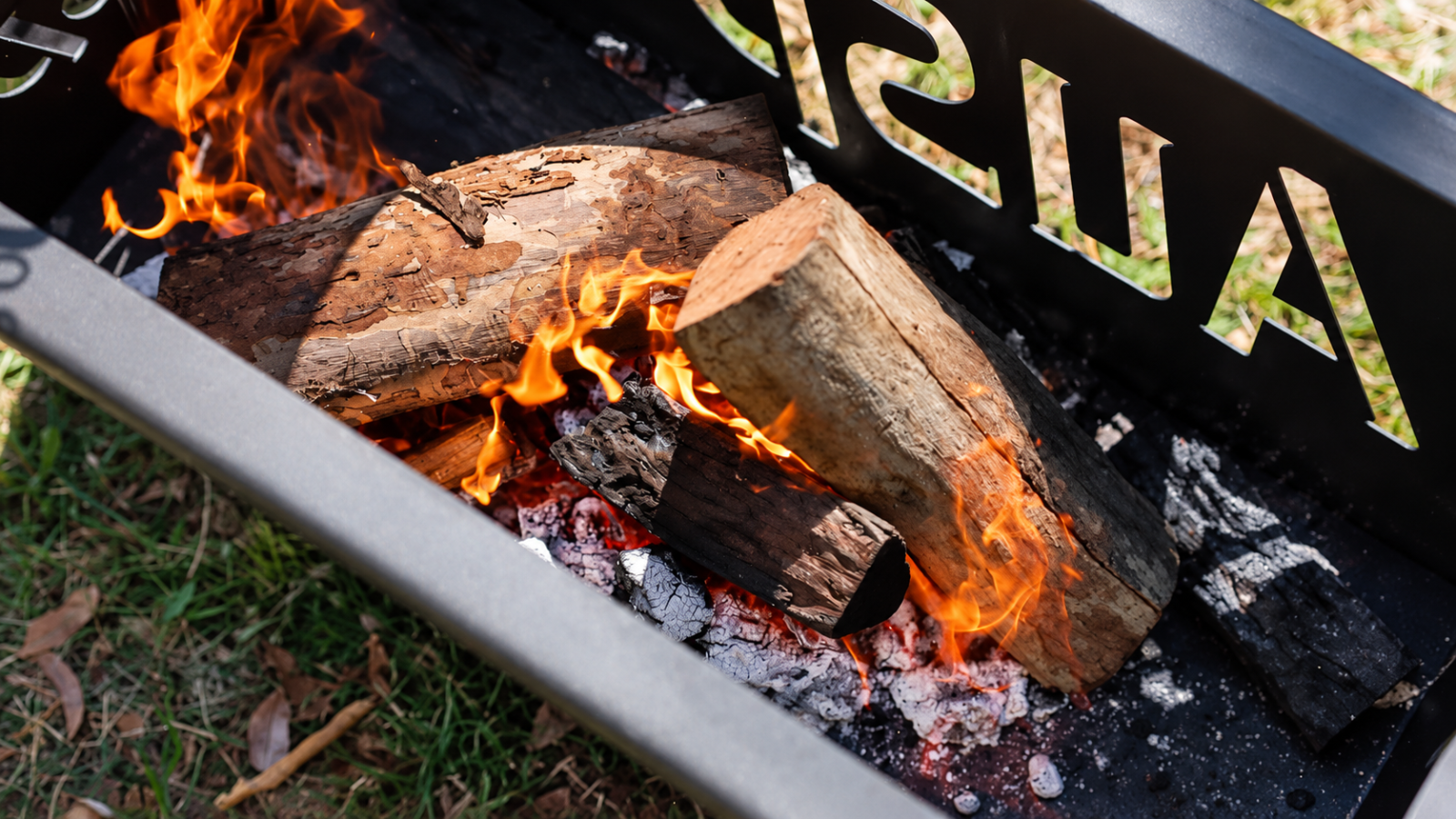
You can run this cook in your Auspit firepit or any other firepit you've got set up at camp. Get 2 to 3 firelighters going first, then stack your wood /charcoal on top rather than trying to light it directly. That gives the fuel time to properly catch before you're relying on it for heat.
Let the fire establish itself before the chicken goes anywhere near it. You're after a solid bed of heat, not flames licking straight up at the bird.
Cook Time & Turning
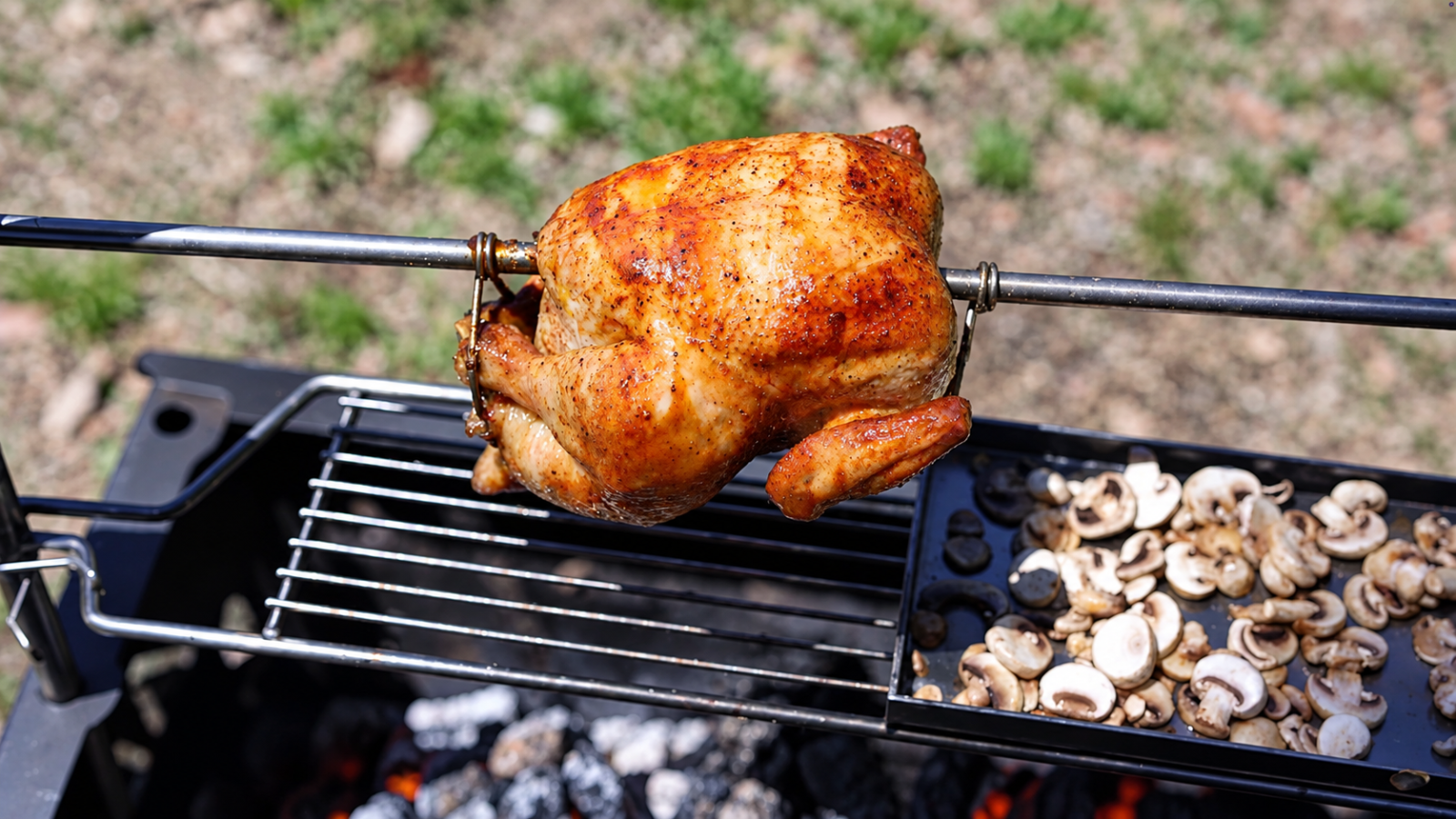
Once the fire's going properly, put the chicken on and let it turn. This cook typically takes 1 to 1.5 hours, depending on the size of your bird and how hot your fire's running. The rotisserie does the work here, turning the chicken evenly so every side gets its time facing the heat without you standing over it flipping anything.
Resist the urge to rush the fire hotter to speed things up. A steady, moderate heat over the full cook time gives you a better result than a blazing fire that chars the skin before the inside's done.
Check the Chicken's Internal Temperature
Don't guess on doneness. Check the rotisserie chicken internal temperature with an instant read thermometer throughout the cook, not just at the end. Push it into the thickest part of the thigh, avoiding the bone, and you're looking for around 74 to 75°C before it's safe to pull off the fire.
Checking a few times through the cook rather than once at the end also tells you if one side's running hotter than the other, so you can adjust the chicken's position over the coals if needed.
Once you've hit temperature, take it off, give it a few minutes to rest, then carve in.
FAQ
How long does it take to cook a whole chicken on a rotisserie?
Around 1 to 1.5 hours for a standard-sized bird over a steady campfire, though it depends on the size of the chicken and how hot your fire is running. Checking internal temperature is a far more reliable guide than going on time alone.
How do I truss a chicken before putting it on a spit?
Tuck the wing tips under the body and tie the legs together with kitchen string before skewering. It keeps the shape tighter on the spit and helps the chicken cook more evenly, though with the chicken prongs locking it firmly to the skewer, a loose truss won't ruin the cook.
Wrap Up
A whole chicken on the Auspit is proof you don't need a full kitchen to get a genuinely good feed happening at camp. Rub it properly, lock it onto the skewer, get your fire established before the chicken goes on, and trust your thermometer over the clock. That's the whole method.
If you're keen on more ways to get the most out of your setup, have a read of why campers keep coming back to the Auspit for a look at what else it's good for beyond a Sunday roast chicken.