Best Cuts Of Beef For Rotisserie In Australia And How To Cook Each One Right
Author: Sasha Halabi Date Posted:31 March 2026
.png "Beef roast cooking on an Auspit rotisserie over hot charcoal embers.")
If you have ever watched a beef roast turning slowly over coals and thought that looks unreal, you are already halfway there. The other half is choosing the right cut. Rotisserie cooking rewards beef that can baste itself, hold its shape, and stay juicy while the outside builds colour. Pick the wrong cut and it can dry out, slump on the skewer, or cook unevenly. Pick the right cut, and you get that proper spit roast result, crisped edges, rosy middle, and slices your mates will talk about for weeks.
This guide breaks down the best beef cuts for rotisserie in Australia, what to ask your butcher for, and exactly how to set up the fire so each cut comes off the spit tender and confident.
What Makes A Cut Great On A Rotisserie
Rotisserie beef does best when the cut is compact and reasonably even in thickness, has enough fat or marbling to keep it moist, and can be trussed into a neat shape so it spins without wobbling. A fat cap is your friend because it renders slowly and keeps the surface protected while the centre climbs to temperature. Lean cuts can still work, but they need more care with heat control and often benefit from a simple baste.
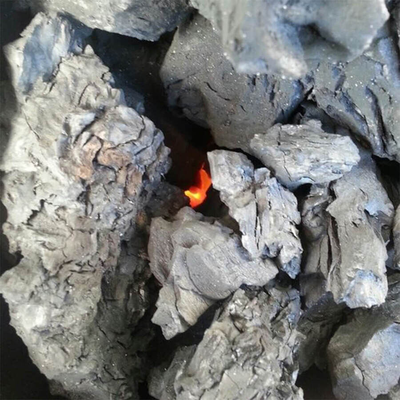
If you are cooking over coals while camping or in the backyard, your heat management matters just as much as the cut. For an Auspit style cook, aim for a coal bed that gives you steady radiant heat rather than big flames, then adjust height to fine tune the cook. If you need a simple walkthrough, check out the Auspit guide on controlling heat over coals.
The Best Cuts Of Beef For Rotisserie In Australia
Rib Roast Or Prime Rib
If you want the safest, most impressive result, rib roast is hard to beat. It has strong marbling, it holds shape well, and it loves the gentle self basting effect of the spit. Ask your butcher for a rolled rib roast, or a standing rib roast if you want the bone on show, then truss it so it spins evenly.
.png "Charcoal roasted prime rib served on a wooden board with grilled corn, potatoes, zucchini, and roasted capsicum.")
How to cook it:
Keep the heat moderate, do not rush it. Start with a steady coal bed, rotate continuously, and cook to internal temperature rather than time. For medium rare, pull it around 52 to 55 degrees Celsius and rest well so it carries over. If you like a darker crust, finish with a short burst of higher heat at the end rather than blasting it early.
Scotch Fillet Roast
Scotch fillet roast is essentially ribeye in roast form. It is rich, forgiving, and ideal when you want premium eating without the full prime rib presentation. It also suits shorter cooks, which is handy if you are doing a weekend camp cook and want a big result without an all day fire.
.png "Sliced scotch fillet roast with a charred crust and juicy pink centre on a wooden cutting board.")
How to cook it:
Similar approach to rib roast, steady heat, rotate, pull at your target temperature, rest properly. A simple salt, pepper, garlic base seasoning works beautifully because the beef flavour is already doing the heavy lifting.
Rump Roast
Rump is a very Australian cut, and it can be brilliant on the spit when you treat it right. It is leaner than rib, often larger, and needs careful heat control to avoid drying out. The upside is value, availability, and great beef flavour.
.png "Slicing a charcoal roasted rump roast showing a juicy medium-rare centre on a wooden cutting board.")
How to cook it:
Choose a piece with a decent fat cap, ask for it rolled if possible, and truss it tight. Cook a touch lower and slower than you think, keep the surface from scorching, and consider a light baste during the cook, even something as simple as beef drippings, melted butter, or a mild oil-based herb mix. Pull at medium rare to medium, then rest well and slice across the grain.
Sirloin Roast
Sirloin sits in a nice middle ground, more tender than some budget roasts, not as rich as rib. It is a great option when you want a clean slice and a classic roast beef result.
.png "Charcoal roasted sirloin beef slices served with crispy chips and greens on a plate.")
How to cook it:
Keep the heat steady and avoid flare-ups. Truss it into a uniform cylinder so it cooks evenly. Sirloin benefits from resting longer than people expect, because it firms up and slices cleaner after a proper rest.
Topside And Silverside
These are classic roast cuts, but on a rotisserie, they are not as forgiving. They can work, especially for thin slicing, but you must respect how lean they are. If you choose these, do it because you want value and you are willing to be precise.
.png "Sliced topside and silverside beef served with asparagus and roasted cherry tomatoes on a white plate.")
How to cook it: Keep the heat gentle, cook to medium at most, and plan for a baste or a wrap-style approach near the end to protect the surface. Trussing matters here more than anywhere else, because a loose lean roast can wobble and cook unevenly.
Chuck Roast
Chuck is the wildcard that people either love or get wrong. It has great flavour and plenty of connective tissue, which means it can turn buttery, but only if you give it the time and the right heat. It is not a quick roast. Think of chuck as a rotisserie slow cook where the spin keeps the outside from drying while the inside breaks down.
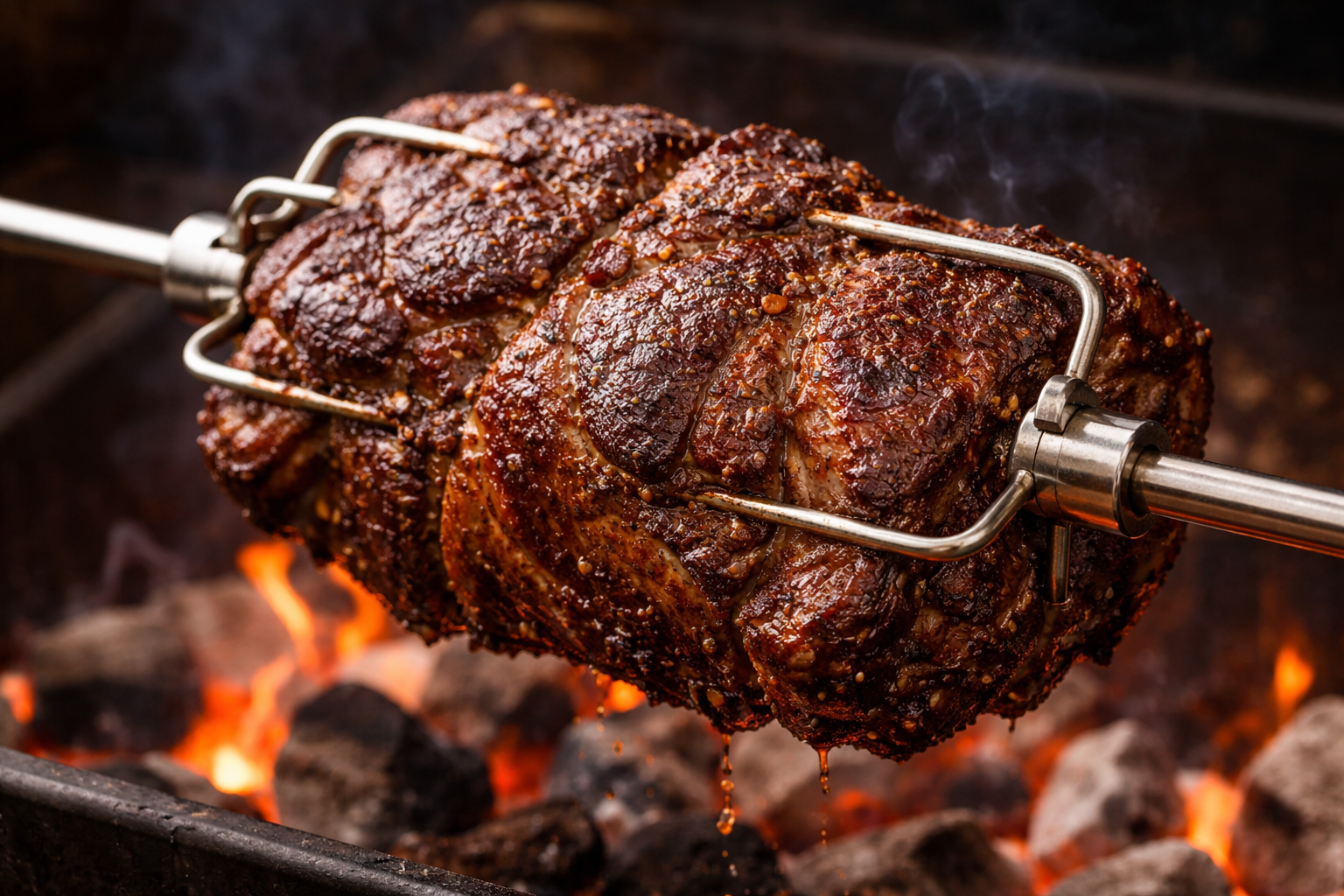
How to cook it:
Set up for a longer cook with steady coals and patient heat. If your spit setup allows it, run the roast a little higher and use a larger coal bed spread out for even radiant heat. Aim for a tender finish rather than a rosy slice, and do not skip the rest. If you want a sliced chuck outcome, you need an exceptionally well-marbled piece and perfect control, otherwise treat it as pull-apart beef and serve it that way.
Picanha
Picanha is a strong choice for rotisserie, especially if you want something that feels special but still cooks fast enough for a weekend. It has a distinctive fat cap and loves high radiant heat, giving you crisp edges and juicy beef.
.png "Sliced charcoal roasted Picanha steak with a juicy pink centre and crispy fat cap on a wooden board.")
How to cook it:
Keep the fat cap on, score it lightly, season confidently, and let it spin over steady coals. Picanha can handle slightly higher heat than lean roasts because the fat protects it. Pull it medium rare, rest, then slice thin across the grain.
Cuts That Are Usually Not Worth Putting On The Spit
Very lean roasts with little fat cover can still be cooked, but they are harder work and easier to mess up. Thin, uneven pieces also cook poorly because the ends overcook before the centre is ready. If you are new to spit cooking, start with rib, scotch fillet, sirloin, or picanha, then branch out once you have your fire control dialled in.
Fire Setup And Heat Control For Beef On The Spit
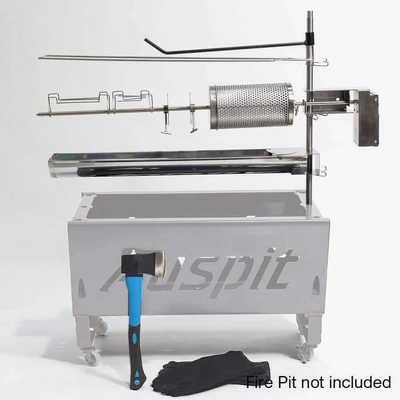
For most beef roasts, you want radiant heat from coals, not flames licking the meat. Build a coal bed that matches the length of the roast, keep it even, and top up little and often rather than dumping a huge load at once. If you are using an Auspit, adjust the height so you can keep the surface colouring steady without scorching. This is also where a drip tray can help because it reduces flare-ups and gives you drippings for a quick baste.
Simple Rotisserie Timing Guide That Works In The Real World
Time varies by cut shape, starting temperature, wind, and coal quality, so internal temperature is the only reliable way to cook rotisserie beef consistently. As a rough rule, most roasts cook best with steady heat and patience. Use a thermometer, pull at your target temperature, then rest. Resting is not optional. It is the difference between juicy slices and a cutting board full of lost moisture.
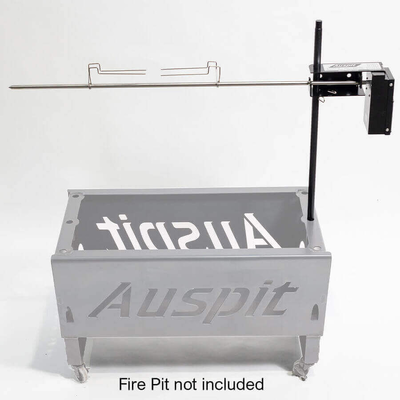
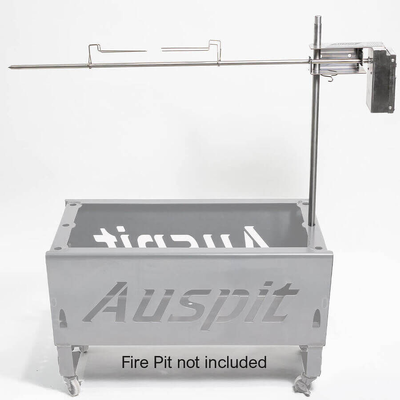
Portable rotisserie cooking is one of the easiest ways to get consistent beef roast results at camp because the rotation evens out the heat and self-bastes the surface while you manage the coals. A compact system like an Auspit lets you cook proper roast cuts without needing a built-in BBQ, which is why it suits weekend trips and simple bush setups where space matters.